A conference on Transport, Climate Change
and the Scottish Executive's National Transport Strategy
Monday 8th May 2006 - The Hub, Castlehill, Edinburgh
- Conference report - summary report
- TRANSform
Scotland set out the challenges faced in tackling climate emissions at its
‘Facing the Flood’ conference held in Edinburgh in early May.
The conference looked at the extent to which our travel choices need to
change, how successful existing policies have been, and the merits and drawbacks
of alternative measures.
Richard Dixon, Director of WWF Scotland, summarised current evidence of climate change and considered its damaging implications for different parts of the world. Government has been aware of these issues for years, yet their transport policies fall short of what is needed if climate targets are to be met. In Scotland, the Scottish Executive had gone back on promises to take action to reduce traffic levels and failed to support Edinburgh’s congestion charge plans, yet were proceeding with Glasgow’s M74 urban motorway plans despite losing the public inquiry into the project. The Executive had now also commenced subsidising new short-haul air routes, despite this being the most climate-damaging modes of transport.
Professor Abigail Bristow of Loughborough University set out options for reducing emissions from transport, from technological improvements (low emissions vehicles), economic instruments (fuel duties, road charging), incentives to use public transport (fare reductions, service improvements) to telecommunications and ‘soft measures’. Bristow concluded that a combination of all of these measures would be required to enable the UK to reach climate targets.
Jillian Anable of the Energy Research Centre focused on ‘soft measures’ (such as travel plans, personalised travel planning, car clubs, car sharing, teleworking, and marketing campaigns). While some ‘soft’ measures have greater overall effects than others and some groups are more responsive than others, it was quite clear that all of these measures are important and that they represented value for money.
The afternoon session of the conference heard from Åsa Romson of Stockholm City Council on the success of her city’s congestion charge trial, and Aat Peterse from the European Federation for Transport and Environment on their efforts to improve CO2 emission standards across the European car industry.
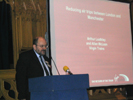
The final session of the conference looked at the opportunities for rail services to substitute for short-haul aviation. The conference heard from Virgin Trains’ Arthur Leathley and Lancaster University’s Professor Roger Kemp. Leathley described Virgin’s success in turning the balance of the Manchester-London travel back from air to rail, and discussed opportunities in Scotland. Kemp was also keen to see travel transferred to rail, but was sceptical about the energy and emissions savings from very high-speed rail now being discussed in political circles.
TRANSform Scotland chair David Spaven concluded the conference by setting out five priorities for action in the new Scottish Executive National Transport Strategy. Firstly, a national programme for road traffic reduction. Secondly, a review of transport expenditure so that investment reinforces sustainable transport rather than damages progress towards it. Thirdly, that funding for local authorities should be linked to action on climate change. Fourthly, that government needs to take the lead in implementing a national road charging scheme. Finally, that we need campaigns to change public perception, learning for example from Scotland’s successful recent smoking ban as well as more long-standing campaign successes on seat-belts and drink-driving.
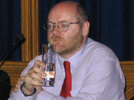
Richard Dixon
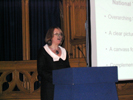
Frances Duffy
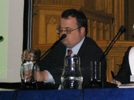
Tim Taylor
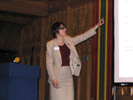
Abigail Bristow
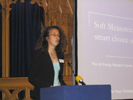
Jillian Anable
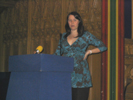
Åsa Romson
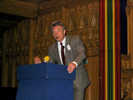
Aat Peterse
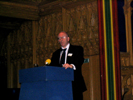
Allan McLean and Arthur Leathley
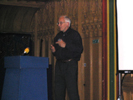
Roger Kemp
